I'm back after having been distracted by such trifles as pneumonia and marriage. The upcoming weekend will be spent in the 18th century and I thought it called for making this hair powder.
Updated recipe
375 g corn starch
47 g Orris root
60 ml Dolomit
Corn starch was used for hair powder in the 18th century, though at the end and mainly in USA, but today that is readily available in food stores while I have no idea where to get wheat starch. And starch is starch, so I didn’t feel bad about substituting it. Orris root was found in a store that caters herbs. The big difference is the original recipes call for calcinated and pulverized bones. It’s not something I have readily at hand, but what it is, really, is calcium. Dolomit that you buy in health stores is made out of calcium and magnesium and can be bought as a powder. As magnesium was used for white pigment in the 18th century too, I felt that this was the best substitute I could come up with.
I made a smaller batch than the original recipe, ¼ of it. The amount of Dolomit is an estimated guess for how much is 6 cuttlefish bones and a handful of bones when pulverized? Its main purpose is to whiten the powder and I would say that what shade you want is very much up to taste. I don’t think it would change the texture in any way if you added more white pigment.
Showing posts with label iron oxide. Show all posts
Showing posts with label iron oxide. Show all posts
Wednesday, June 27, 2012


Wednesday, May 09, 2012
Making a red lip salve
Today I tried my hand in "An excellent Lip-salve", a recipe that I discussed here. After reading up I decided to use olive oil instead of rose oil, as that is often use as base oil for just rose oil. I also made a much smaller batch, I didn't want to screw up big.
Updated recipe
Myrrh, 4 g
Honey, 15 ml
Bees wax, 8 g
Olive oil, 22 ml
Iron oxide, 4 g
Rosewood oil, 3 drops Note: A bit late it has come to my attention that Brazilian Rosewood is an endangered species, so my recommendation is to leave the salve unscented or add a few drops of another scented oil.
Edible gold powder, 2 ml (optional and used for half the batch)
I started out mixing everything apart from the pigment, Rosewood oil and the gold powder. It smelled quite nicely of honey and resin.
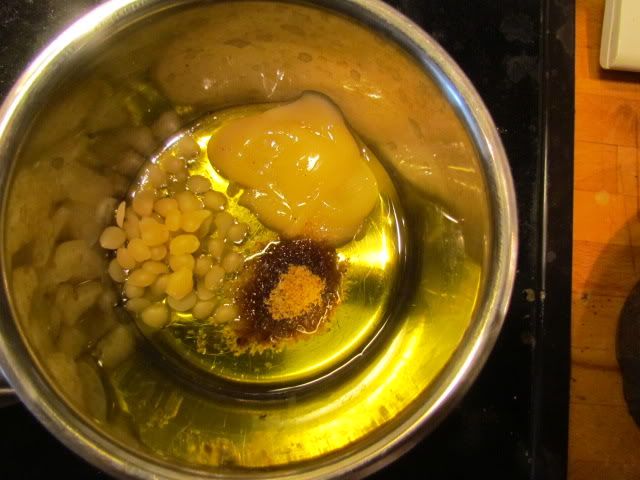
Mixing it together on low heat in soon became a cohesive mass that first was quite runny and then got thicker and thicker.
Updated recipe
Myrrh, 4 g
Honey, 15 ml
Bees wax, 8 g
Olive oil, 22 ml
Iron oxide, 4 g
Rosewood oil, 3 drops Note: A bit late it has come to my attention that Brazilian Rosewood is an endangered species, so my recommendation is to leave the salve unscented or add a few drops of another scented oil.
Edible gold powder, 2 ml (optional and used for half the batch)
I started out mixing everything apart from the pigment, Rosewood oil and the gold powder. It smelled quite nicely of honey and resin.

Mixing it together on low heat in soon became a cohesive mass that first was quite runny and then got thicker and thicker.
Tuesday, May 01, 2012
An excellent Lip-Salve
159. An excellent Lip-Salve
Take an ounce of Myrrh, as much Litharge in fine powder, four ounces of Honey, two ounces of Bees-wax, and six ounces of Oil of Roses; mix them over slow fire. Those who are inclined may add a few drops of Oil of Rhodium, and some Leaf Gold (The Toilet of Flora, page 135)
An admirably clear recipe, with exact measurements for most of the ingredients. Let's take a closer look on those:
Myrrh A resin that have been in use since ancient times as perfume and incense but also for its medical proprieties. It is antiseptic and has a long standing tradition in various mouth remedies, like sores and cleaning teeth and gums. Melts tolerable well into vegetable oils. Is considered safe, but shouldn't be used the first 5 months of a pregnancy.
Litharge Lead pigment, in this case red. Poisonous.
Honey Apart from it's sweet favour, honey also have healing properties and works both as an antiseptic and as antibacterial. It also softens skin and can be used in salves and creams. Safe, but small children should not eat it.
Bees-wax A natural wax produced by honey bees. Melts well into oils and is often used as base for creams. It isn't absorbed by the skin, but doesn't clog the pores and softens and protects. Safe.
Oil of Roses ie Rose oil. An essential oil extracted from rose peals. It is very labour intensive and the oil is therefore very expensive. Used in perfumes and other cosmetics and is considered safe.
Oil of Rhodium Has nothing to do with the chemical element. Rhodium oil is also known as Rosewood and comes from the Brazilian Rosewood. Used in perfumes but is also healing and antiseptic. It also have a slightly deodorising effect. Considered safe. Note: A bit late it has come to my attention that Brazilian Rosewood is an endangered species, so my recommendation is to leave the salve unscented or add a few drops of another scented oil.
Leaf Gold Gold leafs are extremely thin sheets of gold that is used for gilding. Though an metal, gold is used in alternative medicine and is considered anti-inflammatory. Edible gold leaf can be found in well-sorted food stores
All the ingredients, if we disregard the Litharge, is quite safe to use and almost all have properties that makes them very suited for a lip salve. It doesn't seem to be very hard to make. The Litharge have to be substituted, of course and I plan to use Iron oxide instead. All the other ingredients are perfectly possible to attain, but I'm going to substitute the rose oil too. It's use in this recipe seems to be to provide oil and scent, and disregarding the scent, well, I think I could use and unscented oil instead. With the myrrh and the Rhodium oil I think that it will smell quite nicely anyway. I haven't decided on what kind of oil yet, but I have used almond and jojoba oil before and I think both would work well. As for gold leaf I happen to have edible gold dust in my cupboard already, so why not try it? I have all the ingredients I need except myrrh, but I know where to get it- hopefully I will have time to go there this week.

Lady Altamont by George Romeny, 1788, Tate Colletion
Take an ounce of Myrrh, as much Litharge in fine powder, four ounces of Honey, two ounces of Bees-wax, and six ounces of Oil of Roses; mix them over slow fire. Those who are inclined may add a few drops of Oil of Rhodium, and some Leaf Gold (The Toilet of Flora, page 135)
An admirably clear recipe, with exact measurements for most of the ingredients. Let's take a closer look on those:
Myrrh A resin that have been in use since ancient times as perfume and incense but also for its medical proprieties. It is antiseptic and has a long standing tradition in various mouth remedies, like sores and cleaning teeth and gums. Melts tolerable well into vegetable oils. Is considered safe, but shouldn't be used the first 5 months of a pregnancy.
Litharge Lead pigment, in this case red. Poisonous.
Honey Apart from it's sweet favour, honey also have healing properties and works both as an antiseptic and as antibacterial. It also softens skin and can be used in salves and creams. Safe, but small children should not eat it.
Bees-wax A natural wax produced by honey bees. Melts well into oils and is often used as base for creams. It isn't absorbed by the skin, but doesn't clog the pores and softens and protects. Safe.
Oil of Roses ie Rose oil. An essential oil extracted from rose peals. It is very labour intensive and the oil is therefore very expensive. Used in perfumes and other cosmetics and is considered safe.
Oil of Rhodium Has nothing to do with the chemical element. Rhodium oil is also known as Rosewood and comes from the Brazilian Rosewood. Used in perfumes but is also healing and antiseptic. It also have a slightly deodorising effect. Considered safe. Note: A bit late it has come to my attention that Brazilian Rosewood is an endangered species, so my recommendation is to leave the salve unscented or add a few drops of another scented oil.
Leaf Gold Gold leafs are extremely thin sheets of gold that is used for gilding. Though an metal, gold is used in alternative medicine and is considered anti-inflammatory. Edible gold leaf can be found in well-sorted food stores
All the ingredients, if we disregard the Litharge, is quite safe to use and almost all have properties that makes them very suited for a lip salve. It doesn't seem to be very hard to make. The Litharge have to be substituted, of course and I plan to use Iron oxide instead. All the other ingredients are perfectly possible to attain, but I'm going to substitute the rose oil too. It's use in this recipe seems to be to provide oil and scent, and disregarding the scent, well, I think I could use and unscented oil instead. With the myrrh and the Rhodium oil I think that it will smell quite nicely anyway. I haven't decided on what kind of oil yet, but I have used almond and jojoba oil before and I think both would work well. As for gold leaf I happen to have edible gold dust in my cupboard already, so why not try it? I have all the ingredients I need except myrrh, but I know where to get it- hopefully I will have time to go there this week.

Lady Altamont by George Romeny, 1788, Tate Colletion
Sunday, April 29, 2012
Red pigments used in the 18th century
It feels rather reassuring that after going through red pigments, all but two that I have found so far are actually poisonous. Most of the other ones are still in use today. But still, please note that even if a pigment is considered safe, there is still a possibility to get an allergic reaction to it.
Alkanet root Cold, or blue-toned red pigment coming from a plant, Dyer's bugloss Considered safe and is used today as colourants both in makeup and food.
Brazilwood Warm red pigment coming from wood of Caesalpina brasiliensis. Safe, but the tree is considered an endangered species. Substitute with Red sandalwood.
Carmine, Cochineal Bright red pigment that comes from the scales of the cochineal, an insect. Considered safe and is used today as colourants both in makeup and food.
Field Gromwell, Corn Gromwell, Bastard Alkanet Carl von Linné writes in 1755 that peasant girls in the northern parts of Sweden uses the root for red makeup.
Litharge, Red lead Red pigment made of lead. Poisonous, so even if you could get it, don't try it. Red pigments from Iron oxides can be used instead.
Red sandalwood, Red sanders Red pigment coming from the root of the tree of the same wood. Used in makeup today. Similar to Vermilion in colour, but fades quickly.
Saffron A very expensive spice that colours everything you use it in bright yellow. However, saffron was also used for Safflower in the 18th century. Safflowers can yield both yellow and red pigment, Carthamin. It seems quite likely that saffron in recipes for red makeup really means Carthamin. It is used today as food colourant under the name of Natural Red 26.
Vermilion, Cinnabar A red pigment made of mercury. Poisonous, so even if you could get it, don't try it. Was known to be dangerous in the 18th century but was still used. Substitute with Red sandalwood.

Alkanet root Cold, or blue-toned red pigment coming from a plant, Dyer's bugloss Considered safe and is used today as colourants both in makeup and food.
Brazilwood Warm red pigment coming from wood of Caesalpina brasiliensis. Safe, but the tree is considered an endangered species. Substitute with Red sandalwood.
Carmine, Cochineal Bright red pigment that comes from the scales of the cochineal, an insect. Considered safe and is used today as colourants both in makeup and food.
Field Gromwell, Corn Gromwell, Bastard Alkanet Carl von Linné writes in 1755 that peasant girls in the northern parts of Sweden uses the root for red makeup.
Litharge, Red lead Red pigment made of lead. Poisonous, so even if you could get it, don't try it. Red pigments from Iron oxides can be used instead.
Red sandalwood, Red sanders Red pigment coming from the root of the tree of the same wood. Used in makeup today. Similar to Vermilion in colour, but fades quickly.
Saffron A very expensive spice that colours everything you use it in bright yellow. However, saffron was also used for Safflower in the 18th century. Safflowers can yield both yellow and red pigment, Carthamin. It seems quite likely that saffron in recipes for red makeup really means Carthamin. It is used today as food colourant under the name of Natural Red 26.
Vermilion, Cinnabar A red pigment made of mercury. Poisonous, so even if you could get it, don't try it. Was known to be dangerous in the 18th century but was still used. Substitute with Red sandalwood.
Source: liveinternet.ru via Elisa on Pinterest
Subscribe to:
Posts (Atom)